WSGR logoWSGR logo
WSGR logo
  • Experience
  • People
  • Insights
  • About Us
  • Careers

  • Practice Areas
  • Industries

  • Corporate
  • Intellectual Property
  • Litigation
  • Patents and Innovations
  • Regulatory
  • Technology Transactions

  • Capital Markets
  • Corporate Governance
  • Corporate Life Sciences
  • Derivatives
  • Emerging Companies and Venture Capital
  • Employee Benefits and Compensation
  • Energy and Climate Solutions
  • Executive Advisory Program
  • Finance and Structured Finance
  • Fund Formation
  • Greater China
  • Mergers & Acquisitions
  • Private Equity
  • Public Company Representation
  • Real Estate
  • Restructuring
  • Shareholder Engagement and Activism
  • Tax
  • U.S. Expansion
  • Wealthtech

  • Special Purpose Acquisition Companies (SPACs)

  • Environmental, Social, and Governance

  • AI and Data Center Infrastructure
  • Energy Regulation and Competition
  • Project Development and M&A
  • Project Finance and Tax Credit Transactions
  • Sustainability and Decarbonization
  • Transportation Electrification

  • U.S. Expansion Library and Resources

  • Post-Grant Review
  • Trademark and Advertising

  • Antitrust Litigation
  • Arbitration
  • Board and Internal Investigations
  • Class Action Litigation
  • Commercial Litigation
  • Consumer Litigation
  • Corporate Governance Litigation
  • Employment Litigation
  • Executive Branch Updates
  • Government Investigations
  • Internet Strategy and Litigation
  • Patent Litigation
  • Securities Litigation
  • State Attorneys General
  • Supreme Court and Appellate Practice
  • Trade Secret Litigation
  • Trademark and Copyright Litigation
  • Trial
  • White Collar Crime

  • Advertising, Promotions, and Marketing
  • Antitrust and Competition
  • Committee on Foreign Investment in the U.S. (CFIUS)
  • Communications
  • Data, Privacy, and Cybersecurity
  • Export Control and Sanctions
  • FCPA and Anti-Corruption
  • FDA Regulatory, Healthcare, and Consumer Products
  • Federal Trade Commission
  • Fintech and Financial Services
  • Government Contracts
  • National Security and Trade
  • Payments
  • State Attorneys General
  • Strategic Risk and Crisis Management
  • Tariffs, Customs, and Import Compliance

  • Antitrust and Intellectual Property
  • Antitrust Civil Enforcement
  • Antitrust Compliance and Business Strategy
  • Antitrust Criminal Enforcement
  • Antitrust Litigation
  • Antitrust Merger Clearance
  • European Competition Law
  • Third-Party Merger and Non-Merger Antitrust Representation

  • Anti-Money Laundering
  • Foreign Ownership, Control, or Influence (FOCI)
  • Team Telecom

  • AI in Healthcare
  • Animal Health
  • Artificial Intelligence and Machine Learning
  • Aviation
  • Biotech
  • Blockchain and Cryptocurrency
  • Clean Energy
  • Climate and Clean Technologies
  • Communications and Networking
  • Consumer Products and Services
  • Data Storage and Cloud
  • Defense Tech
  • Diagnostics, Life Science Tools, and Deep Tech
  • Digital Health
  • Digital Media and Entertainment
  • Electronic Gaming
  • Fintech and Financial Services
  • FoodTech and AgTech
  • Global Generics
  • Internet
  • Life Sciences
  • Medical Devices
  • Mobile Devices
  • Mobility
  • NewSpace
  • Quantum Computing
  • Semiconductors
  • Software

  • Offices
  • Country Desks
  • Events
  • Community
  • Our Diversity
  • Sustainability
  • Our Values
  • Board of Directors
  • Management Team

  • Austin
  • Boston
  • Boulder
  • Brussels
  • Century City
  • Hong Kong
  • London
  • Los Angeles
  • New York
  • Palo Alto
  • Salt Lake City
  • San Diego
  • San Francisco
  • Seattle
  • Shanghai
  • Washington, D.C.
  • Wilmington, DE

  • Law Students
  • Judicial Clerks
  • Experienced Attorneys
  • Patent Agents
  • Business Professionals
  • Alternative Legal Careers
  • Contact Recruiting

Communications

Open PDF
  • We Represent the Communications Industry Leaders of Today and Tomorrow

    Wilson Sonsini has represented many of the leaders—including pioneers, innovators, and investors—that have advanced the communications industry from its earliest wireline, networking, and hardware era to its always-on, digital, and fast-developing status today. We continue to work with the founders, companies, and investors driving the future of communications.

  • We Provide Trusted Legal Counsel to Meet Telecom Client Needs

    Wilson Sonsini places a premium on providing actionable and trusted legal and regulatory counsel on telecom/FCC matters. We have deep expertise in advising both established communications providers and the emerging media and technology companies that do not fit neatly into traditional regulatory frameworks. We stay ahead of legislative and regulatory developments that create investigative, enforcement, and litigation risks for both emerging technology companies and established communications providers.

  • Our Team Has Expertise in a Range of Highly Relevant Practice Areas and Industries

    Our communications regulatory practice is anchored by a core team of lawyers with expertise in a range of highly relevant practice areas and industries. This integrated approach to regulatory issues enables our team to assist a broad cross-section of clients in navigating an array of regulatory, compliance, and business matters.

  • We Advise Unmanned Aircraft and NewSpace Clients, Plus Venture Capital Firms and Investors

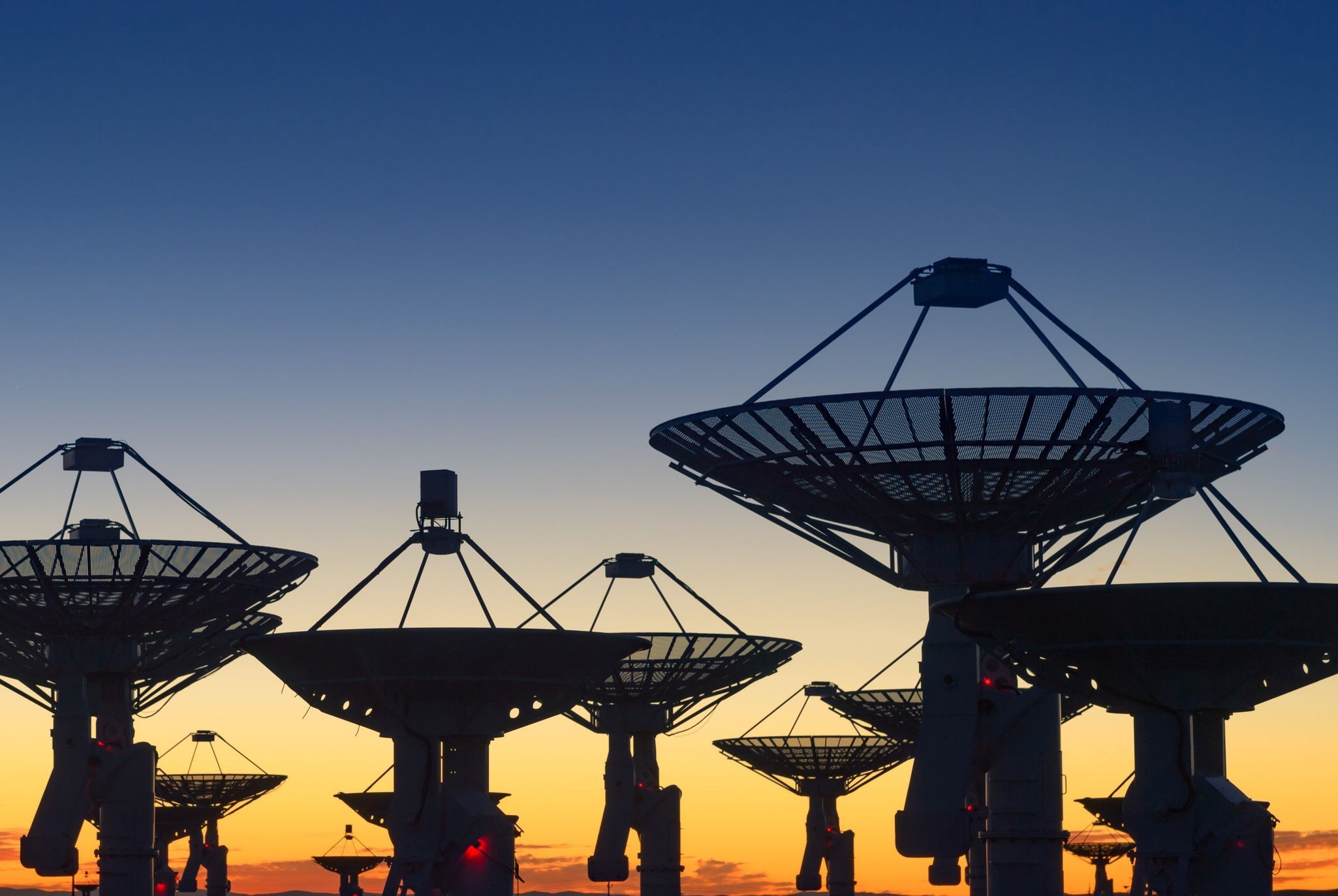
    Wilson Sonsini represents clients in the unmanned aircraft and NewSpace sectors, both of which fall within the scope of FCC regulatory scrutiny. In addition to representing clients that include drone and launch vehicle manufacturers, satellite operators, and servicers, we advise VC firms and other investors on regulatory impediments, due diligence, and other areas.

Why Wilson Sonsini

Since the start of the digital revolution—when Silicon Valley earned its name through the pioneering visions of its many fearless entrepreneurs—Wilson Sonsini has been a steward of innovation, providing expert counsel to companies and individuals whose disruptive technological advancements continually challenge and reshape the legal and regulatory landscape.

This extends to the communications sector. As information technology has evolved, the communications regulatory landscape has become increasingly complex. In the past, there was a clear distinction between tech and telecom companies, which made regulatory requirements relatively easy to silo. Today, however, as industries have matured and new markets have been created, both emerging technology companies and established communications providers increasingly fall under the FCC’s regulatory oversight. Indeed, the convergence of tech and telecom has positioned the FCC as an agency that can impact business models and product development strategies in myriad ways.

That is why our communications regulatory practice is anchored by a core team of lawyers with expertise in a range of highly relevant practice areas and industries:

  • Communications and Networking
  • Mobile Devices
  • Technology Transactions
  • NewSpace and Unmanned Aircrafts
  • Team Telecom
  • National Security (CFIUS and Export Trade)
  • Data, Privacy, and Cybersecurity
  • Internet Strategy and Litigation
  • Antitrust and Competition
  • Artificial Intelligence and Machine Learning
  • Digital Media and Entertainment

What We Do

Our communications team routinely assists clients in navigating the highly complex and rapidly evolving legal and regulatory landscape. Whether negotiating high-stakes technology transactions, guiding strategy on product development, or representing companies in rulemakings and adjudicatory proceedings, we take pride in providing premier, results-oriented service.

Wilson Sonsini routinely represents entities and individuals in business-critical mergers, acquisitions, and transfers of control of FCC-regulated entities and assets. Our extensive experience spans advising venture-backed companies, established communications providers, new market entrants, and investors and commercial banks, debtors, and creditors regarding FCC licensing in transactional contexts, including in the following areas:

  • The legal requirements and process for obtaining, assigning, and transferring control of FCC licenses and structuring transactions to ensure regulatory compliance or mitigate the effect of these legal requirements
  • Due diligence in transactions involving FCC-regulated targets and assets
  • Ownership attribution of FCC licenses and structuring transactions to address such attribution
  • Petitions for declaratory ruling to exceed foreign ownership benchmarks under the Communications Act
  • Reviews by U.S. national security regulators (e.g., CFIUS and Team Telecom)
  • Regulatory compliance and business issues associated with U.S. market entry

In addition, we work with companies and investors to prepare for and solve regulatory problems associated with a wide range of communications regulatory issues, including:

  • Regulatory authorizations: We assist clients in understanding and proceeding with processes to secure FCC licenses and authorizations—for instance, for clients developing new space-based technologies, understanding the process to acquire space station, earth station, or experimental licenses, market entry, or Special Temporary Authorizations (STAs).
  • Compliance considerations: We guide new market entrants in obtaining access to frequency bands, managing corporate regulatory compliance, and understanding best practices within their industries.
  • Commercial issues: We assist companies in crafting agreements to acquire regulated services that avoid the undue allocation of regulatory burdens to parties not yet equipped to handle those issues.
  • National security issues: We represent clients in navigating the FCC’s many recent national security-focused initiatives, including procurement issues related to the FCC’s Covered List and the national security review of acquisitions and transfers of International Section 214 Authorizations.
  • Spectrum policy: We advocate for our clients in shaping spectrum policy, both domestically and internationally, to safeguard their interests.
  • Enforcement: Government investigations demand swift, expert legal attention. When it comes to FCC investigations and enforcement actions, the stakes are higher due to the complexity of the regulatory landscape. Navigating these challenges requires in-depth knowledge of the FCC’s rules, industry practices, and enforcement protocols.

Who We Represent

Our communications attorneys advise a wide range of clients from virtually all segments and related sub-sectors of the communications industry, including internet service and online content providers, digital media companies, cloud storage and business data service providers, software developers, and equipment manufacturers. We represent both emerging technology companies and established communications providers that must align their business operations or investment activities with both longstanding statutes and newer laws and regulations that govern the backbone of our domestic U.S., global, and now extra-terrestrial communications.

Our communications and networking clients are engaged in all aspects of the industry, including wireline and wireless voice and data, broadband, video, and satellite communications. Our clients’ business activities involve manufacturing and marketing computer networking equipment; expanding underlying networking technologies such as communications-specific semiconductors and optical switches; deploying networking systems; and developing wireless equipment, software, and services.

We also represent clients in the unmanned aircraft and NewSpace sectors, both of which fall within the scope of FCC regulatory scrutiny. In addition to representing clients that include drone and launch vehicle manufacturers, satellite operators, and servicers, we advise venture capital firms and other investors on regulatory impediments, due diligence, and other areas.


Overview

Why Wilson Sonsini

Since the start of the digital revolution—when Silicon Valley earned its name through the pioneering visions of its many fearless entrepreneurs—Wilson Sonsini has been a steward of innovation, providing expert counsel to companies and individuals whose disruptive technological advancements continually challenge and reshape the legal and regulatory landscape.

This extends to the communications sector. As information technology has evolved, the communications regulatory landscape has become increasingly complex. In the past, there was a clear distinction between tech and telecom companies, which made regulatory requirements relatively easy to silo. Today, however, as industries have matured and new markets have been created, both emerging technology companies and established communications providers increasingly fall under the FCC’s regulatory oversight. Indeed, the convergence of tech and telecom has positioned the FCC as an agency that can impact business models and product development strategies in myriad ways.

That is why our communications regulatory practice is anchored by a core team of lawyers with expertise in a range of highly relevant practice areas and industries:

  • Communications and Networking
  • Mobile Devices
  • Technology Transactions
  • NewSpace and Unmanned Aircrafts
  • Team Telecom
  • National Security (CFIUS and Export Trade)
  • Data, Privacy, and Cybersecurity
  • Internet Strategy and Litigation
  • Antitrust and Competition
  • Artificial Intelligence and Machine Learning
  • Digital Media and Entertainment

What We Do

Our communications team routinely assists clients in navigating the highly complex and rapidly evolving legal and regulatory landscape. Whether negotiating high-stakes technology transactions, guiding strategy on product development, or representing companies in rulemakings and adjudicatory proceedings, we take pride in providing premier, results-oriented service.

Wilson Sonsini routinely represents entities and individuals in business-critical mergers, acquisitions, and transfers of control of FCC-regulated entities and assets. Our extensive experience spans advising venture-backed companies, established communications providers, new market entrants, and investors and commercial banks, debtors, and creditors regarding FCC licensing in transactional contexts, including in the following areas:

  • The legal requirements and process for obtaining, assigning, and transferring control of FCC licenses and structuring transactions to ensure regulatory compliance or mitigate the effect of these legal requirements
  • Due diligence in transactions involving FCC-regulated targets and assets
  • Ownership attribution of FCC licenses and structuring transactions to address such attribution
  • Petitions for declaratory ruling to exceed foreign ownership benchmarks under the Communications Act
  • Reviews by U.S. national security regulators (e.g., CFIUS and Team Telecom)
  • Regulatory compliance and business issues associated with U.S. market entry

In addition, we work with companies and investors to prepare for and solve regulatory problems associated with a wide range of communications regulatory issues, including:

  • Regulatory authorizations: We assist clients in understanding and proceeding with processes to secure FCC licenses and authorizations—for instance, for clients developing new space-based technologies, understanding the process to acquire space station, earth station, or experimental licenses, market entry, or Special Temporary Authorizations (STAs).
  • Compliance considerations: We guide new market entrants in obtaining access to frequency bands, managing corporate regulatory compliance, and understanding best practices within their industries.
  • Commercial issues: We assist companies in crafting agreements to acquire regulated services that avoid the undue allocation of regulatory burdens to parties not yet equipped to handle those issues.
  • National security issues: We represent clients in navigating the FCC’s many recent national security-focused initiatives, including procurement issues related to the FCC’s Covered List and the national security review of acquisitions and transfers of International Section 214 Authorizations.
  • Spectrum policy: We advocate for our clients in shaping spectrum policy, both domestically and internationally, to safeguard their interests.
  • Enforcement: Government investigations demand swift, expert legal attention. When it comes to FCC investigations and enforcement actions, the stakes are higher due to the complexity of the regulatory landscape. Navigating these challenges requires in-depth knowledge of the FCC’s rules, industry practices, and enforcement protocols.

Who We Represent

Our communications attorneys advise a wide range of clients from virtually all segments and related sub-sectors of the communications industry, including internet service and online content providers, digital media companies, cloud storage and business data service providers, software developers, and equipment manufacturers. We represent both emerging technology companies and established communications providers that must align their business operations or investment activities with both longstanding statutes and newer laws and regulations that govern the backbone of our domestic U.S., global, and now extra-terrestrial communications.

Our communications and networking clients are engaged in all aspects of the industry, including wireline and wireless voice and data, broadband, video, and satellite communications. Our clients’ business activities involve manufacturing and marketing computer networking equipment; expanding underlying networking technologies such as communications-specific semiconductors and optical switches; deploying networking systems; and developing wireless equipment, software, and services.

We also represent clients in the unmanned aircraft and NewSpace sectors, both of which fall within the scope of FCC regulatory scrutiny. In addition to representing clients that include drone and launch vehicle manufacturers, satellite operators, and servicers, we advise venture capital firms and other investors on regulatory impediments, due diligence, and other areas.

Alerts
FCC Sets New Satellite Spectrum Sharing Framework
On April 30, 2026, the Federal Communications Commission (FCC) adopted an Order fundamentally revising how satellite systems share spectrum in the Ku and Ka bands, replacing the decades-old Equivalent Power Flux Density (EPFD) limits with a performance-based coordination framework for managing interference between geostationary (GSO) and non-geostationary (NGSO) satellite systems. By reforming the EPFD regime, the FCC has removed a longstanding regulatory constraint that was developed to protect GSO systems but has arguably limited NGSO operators’ ability to deliver high-speed, low-latency broadband services.
Alerts
Re-Routing the Market: FCC Adds Foreign-Produced Consumer Routers to Its Covered List
On March 23, 2026, the Federal Communications Commission (FCC) added consumer-grade routers produced in foreign countries to its Covered List (Router Action), with limited exceptions for routers that have been granted a Conditional Approval by the U.S. Department of Defense (DoD), also referred to as the U.S. Department of War (DoW), or the U.S. Department of Homeland Security (DHS).
Alerts
Not All Drones After All: FCC Exempts Certain Foreign-Made Drones and Critical Components from Covered List and Issues Guidance for DoW and DHS Conditional Approvals
On January 7, 2026, the U.S. Department of Defense, also referred to as the U.S. Department of War (DoW), and the Federal Communications Commission (FCC) issued several follow-on items to the FCC’s December 2025 action that had added all new models of foreign-made uncrewed aircraft systems (UAS) and their critical components to the FCC’s Covered List (Drone Action). If left intact, that action would have functionally banned all new models of foreign-produced drones and their critical components from being imported or sold in the U.S. Instead, these new items substantially update—and clarify—the scope of the Drone Action.
Alerts
FCC Restricts Authorization of Foreign-Made Drones and Critical Components
On December 22, 2025, in a surprising and unprecedented action, the Public Safety and Homeland Security Bureau of the Federal Communications Commission (FCC) added to the FCC’s Covered List new models of foreign-made uncrewed aircraft systems (UAS)—commonly referred to as drones—as well as the critical components of these drones. This action effectively bans the importation, marketing, and sale of all such drones and components in the U.S. This client alert unpacks the key issues and questions around the FCC’s action.
Alerts
Trump Administration Issues Executive Order on National AI Policy and Deregulation
On December 11, 2025, the White House issued an Executive Order (EO), “Ensuring a National Policy Framework for Artificial Intelligence,” that establishes a new federal policy on artificial intelligence (AI). The EO states that it is “the policy of the United States to sustain and enhance the United States’ global AI dominance through a minimally burdensome national policy framework for AI.” The EO asserts that leadership in AI is critical to U.S. national and economic security and dominance and that “AI companies must be free to innovate without cumbersome regulation.” To accomplish this, the EO seeks to challenge “onerous” state AI laws through various federal actions.
Client Advisories
FCC Spotlight: Inside the FCC’s Expanding National Security Mandate
From satellites to medical devices, wireless networks to printers, a new national security regulator has come to town: the Federal Communications Commission (FCC). Leveraging its traditional authorities as a regulator of spectrum, communications services, and consumer protection, the FCC has increasingly used its ability to govern entry into those sectors to impose new national security requirements for doing business in the U.S. in recent years. Parties who intentionally emit radiofrequency communications—everyone from satellites to Bluetooth devices—and those who unintentionally do so—i.e., makers of electronic devices of all stripes—should take heed.
View All
Insights
Alerts
FCC Sets New Satellite Spectrum Sharing Framework
On April 30, 2026, the Federal Communications Commission (FCC) adopted an Order fundamentally revising how satellite systems share spectrum in the Ku and Ka bands, replacing the decades-old Equivalent Power Flux Density (EPFD) limits with a performance-based coordination framework for managing interference between geostationary (GSO) and non-geostationary (NGSO) satellite systems. By reforming the EPFD regime, the FCC has removed a longstanding regulatory constraint that was developed to protect GSO systems but has arguably limited NGSO operators’ ability to deliver high-speed, low-latency broadband services.
Alerts
Re-Routing the Market: FCC Adds Foreign-Produced Consumer Routers to Its Covered List
On March 23, 2026, the Federal Communications Commission (FCC) added consumer-grade routers produced in foreign countries to its Covered List (Router Action), with limited exceptions for routers that have been granted a Conditional Approval by the U.S. Department of Defense (DoD), also referred to as the U.S. Department of War (DoW), or the U.S. Department of Homeland Security (DHS).
Alerts
Not All Drones After All: FCC Exempts Certain Foreign-Made Drones and Critical Components from Covered List and Issues Guidance for DoW and DHS Conditional Approvals
On January 7, 2026, the U.S. Department of Defense, also referred to as the U.S. Department of War (DoW), and the Federal Communications Commission (FCC) issued several follow-on items to the FCC’s December 2025 action that had added all new models of foreign-made uncrewed aircraft systems (UAS) and their critical components to the FCC’s Covered List (Drone Action). If left intact, that action would have functionally banned all new models of foreign-produced drones and their critical components from being imported or sold in the U.S. Instead, these new items substantially update—and clarify—the scope of the Drone Action.
Alerts
FCC Restricts Authorization of Foreign-Made Drones and Critical Components
On December 22, 2025, in a surprising and unprecedented action, the Public Safety and Homeland Security Bureau of the Federal Communications Commission (FCC) added to the FCC’s Covered List new models of foreign-made uncrewed aircraft systems (UAS)—commonly referred to as drones—as well as the critical components of these drones. This action effectively bans the importation, marketing, and sale of all such drones and components in the U.S. This client alert unpacks the key issues and questions around the FCC’s action.
Alerts
Trump Administration Issues Executive Order on National AI Policy and Deregulation
On December 11, 2025, the White House issued an Executive Order (EO), “Ensuring a National Policy Framework for Artificial Intelligence,” that establishes a new federal policy on artificial intelligence (AI). The EO states that it is “the policy of the United States to sustain and enhance the United States’ global AI dominance through a minimally burdensome national policy framework for AI.” The EO asserts that leadership in AI is critical to U.S. national and economic security and dominance and that “AI companies must be free to innovate without cumbersome regulation.” To accomplish this, the EO seeks to challenge “onerous” state AI laws through various federal actions.
Client Advisories
FCC Spotlight: Inside the FCC’s Expanding National Security Mandate
From satellites to medical devices, wireless networks to printers, a new national security regulator has come to town: the Federal Communications Commission (FCC). Leveraging its traditional authorities as a regulator of spectrum, communications services, and consumer protection, the FCC has increasingly used its ability to govern entry into those sectors to impose new national security requirements for doing business in the U.S. in recent years. Parties who intentionally emit radiofrequency communications—everyone from satellites to Bluetooth devices—and those who unintentionally do so—i.e., makers of electronic devices of all stripes—should take heed.
View All
Affiliated Programs
Examining The New Federalism in Technology Policy
On February 2-3, 2025, the University of Colorado Law School will host Silicon Flatirons’ 2025 Flagship Conference, “Examining the New Federalism in Technology Policy,” which will explore the future of telecommunications, technology policy, and tech governance. The conference will bring together scholars, policymakers, and industry leaders to discuss the challenges and opportunities in regulating advanced technologies.
Events
Affiliated Programs
Examining The New Federalism in Technology Policy
On February 2-3, 2025, the University of Colorado Law School will host Silicon Flatirons’ 2025 Flagship Conference, “Examining the New Federalism in Technology Policy,” which will explore the future of telecommunications, technology policy, and tech governance. The conference will bring together scholars, policymakers, and industry leaders to discuss the challenges and opportunities in regulating advanced technologies.
Christine K. Au-Yeung
Partner
San Francisco
Christine Au-Yeung is a partner in the San Francisco and Palo Alto offices of Wilson Sonsini Goodrich & Rosati, where she specializes in trademark, copyright, and advertising law. She counsels clients on all aspects of brand protection in the U.S. and throughout the world, including clearance and selection of trademarks, prosecution of trademark applications, licensing, and the resolution of trademark infringement and domain name disputes. She also advises clients on advertising issues, including TCPA compliance related to marketing calls and texts as well as strategies on promotions such as sweepstakes and contests.
  • Trademark and Advertising
View Profile
Jamillia P. Ferris
Partner
Washington, D.C.
Jamillia represents clients in several areas, including merger review, government investigations, and antitrust-related counseling and litigation.
  • Antitrust and Competition
View Profile
Joshua F. Gruenspecht
Partner
Washington, D.C.
Joshua advises domestic and foreign investors, funds, established companies and startups in regulatory, investigative, and enforcement matters.
  • National Security and Trade
View Profile
Christopher N. Olsen
Partner
Washington, D.C.
Christopher advises clients on all aspects of privacy and cybersecurity matters and represents companies under investigation by the FTC and state attorneys general.
  • Data, Privacy, and Cybersecurity
View Profile
Alyssa M. Worsham
Partner
Seattle
Alyssa Worsham is a member of the firm’s trademark and advertising team, which has been recognized in Chambers and Partners’ USA and Global guides, as well as World Trademark Review’s WTR 1000. She focuses on global strategic advice, litigation strategy, and transactional guidance for clients’ trademarks, branding, and advertising in marketplaces where commercial and geographic lines are increasingly blurring. She helps clients assess the risk in selecting new business and product names, and works with them to build, exploit, and protect these names creatively and strategically. Alyssa advises on trademark disputes, domain name disputes, contests and sweepstakes, advertising review, right of publicity, social media issues, Telephone Consumer Protection Act (TCPA) compliance (i.e., the rules surrounding marketing texts and calls), FTC compliance and investigations, copyright, IP diligence, and associated commercial contracts. She works with software companies, biotech start-ups, cosmetics companies, fashion companies, life sciences and digital health companies, agro-tech companies, consumer products, non-profits, and game developers, among others. She advises founders, CEOs, GCs, IP specialists, and chief marketing officers on the critical issues surrounding brand creation, protection, and strategy.
  • Trademark and Advertising
View Profile
Sophia Galleher
Associate
Washington, D.C.
Sophia provides strategic, legal, and policy advice on a wide range of tech and telecommunications regulatory matters to clients operating at the intersection of emerging law, policy, and regulation.
  • National Security and Trade
View Profile
People
Christine K. Au-Yeung
Partner
San Francisco
Christine Au-Yeung is a partner in the San Francisco and Palo Alto offices of Wilson Sonsini Goodrich & Rosati, where she specializes in trademark, copyright, and advertising law. She counsels clients on all aspects of brand protection in the U.S. and throughout the world, including clearance and selection of trademarks, prosecution of trademark applications, licensing, and the resolution of trademark infringement and domain name disputes. She also advises clients on advertising issues, including TCPA compliance related to marketing calls and texts as well as strategies on promotions such as sweepstakes and contests.
  • Trademark and Advertising
View Profile
Jamillia P. Ferris
Partner
Washington, D.C.
Jamillia represents clients in several areas, including merger review, government investigations, and antitrust-related counseling and litigation.
  • Antitrust and Competition
View Profile
Joshua F. Gruenspecht
Partner
Washington, D.C.
Joshua advises domestic and foreign investors, funds, established companies and startups in regulatory, investigative, and enforcement matters.
  • National Security and Trade
View Profile
Christopher N. Olsen
Partner
Washington, D.C.
Christopher advises clients on all aspects of privacy and cybersecurity matters and represents companies under investigation by the FTC and state attorneys general.
  • Data, Privacy, and Cybersecurity
View Profile
Alyssa M. Worsham
Partner
Seattle
Alyssa Worsham is a member of the firm’s trademark and advertising team, which has been recognized in Chambers and Partners’ USA and Global guides, as well as World Trademark Review’s WTR 1000. She focuses on global strategic advice, litigation strategy, and transactional guidance for clients’ trademarks, branding, and advertising in marketplaces where commercial and geographic lines are increasingly blurring. She helps clients assess the risk in selecting new business and product names, and works with them to build, exploit, and protect these names creatively and strategically. Alyssa advises on trademark disputes, domain name disputes, contests and sweepstakes, advertising review, right of publicity, social media issues, Telephone Consumer Protection Act (TCPA) compliance (i.e., the rules surrounding marketing texts and calls), FTC compliance and investigations, copyright, IP diligence, and associated commercial contracts. She works with software companies, biotech start-ups, cosmetics companies, fashion companies, life sciences and digital health companies, agro-tech companies, consumer products, non-profits, and game developers, among others. She advises founders, CEOs, GCs, IP specialists, and chief marketing officers on the critical issues surrounding brand creation, protection, and strategy.
  • Trademark and Advertising
View Profile
Sophia Galleher
Associate
Washington, D.C.
Sophia provides strategic, legal, and policy advice on a wide range of tech and telecommunications regulatory matters to clients operating at the intersection of emerging law, policy, and regulation.
  • National Security and Trade
View Profile
Related Practices
  • Antitrust and Competition
  • Committee on Foreign Investment in the United States (CFIUS)
  • Corporate
  • Data, Privacy, and Cybersecurity
  • Export Control and Sanctions
  • Internet Strategy and Litigation
  • National Security and Trade
  • Regulatory
  • Supreme Court and Appellate
  • Team Telecom
  • Technology Transactions
  • Trademark and Advertising
Related Industries
  • Artificial Intelligence and Machine Learning
  • Aviation
  • Communications and Networking
  • Data Storage and Cloud
  • Digital Media and Entertainment
  • Electronic Gaming
  • Internet
  • Mobile Devices
  • NewSpace
Recent Insights
Alerts
FCC Sets New Satellite Spectrum Sharing Framework
On April 30, 2026, the Federal Communications Commission (FCC) adopted an Order fundamentally revising how satellite systems share spectrum in the Ku and Ka bands, replacing the decades-old Equivalent Power Flux Density (EPFD) limits with a performance-based coordination framework for managing interference between geostationary (GSO) and non-geostationary (NGSO) satellite systems. By reforming the EPFD regime, the FCC has removed a longstanding regulatory constraint that was developed to protect GSO systems but has arguably limited NGSO operators’ ability to deliver high-speed, low-latency broadband services.
Learn More
Alerts
Re-Routing the Market: FCC Adds Foreign-Produced Consumer Routers to Its Covered List
On March 23, 2026, the Federal Communications Commission (FCC) added consumer-grade routers produced in foreign countries to its Covered List (Router Action), with limited exceptions for routers that have been granted a Conditional Approval by the U.S. Department of Defense (DoD), also referred to as the U.S. Department of War (DoW), or the U.S. Department of Homeland Security (DHS).
Learn More
View All
Recent Events
Affiliated Programs
Examining The New Federalism in Technology Policy
On February 2-3, 2025, the University of Colorado Law School will host Silicon Flatirons’ 2025 Flagship Conference, “Examining the New Federalism in Technology Policy,” which will explore the future of telecommunications, technology policy, and tech governance. The conference will bring together scholars, policymakers, and industry leaders to discuss the challenges and opportunities in regulating advanced technologies.
Learn More
  • people
  • insights
  • about us
  • careers
  • Binder
  • Alumni
  • Mailing List Signup
  • Client FTP Portal
  • Privacy Policy
  • Terms of Use
  • Accessibility
WSGR logo
Twitter
LinkedIn
Facebook
Instagram
Youtube
Copyright © 2026 Wilson Sonsini Goodrich & Rosati. All Rights Reserved.