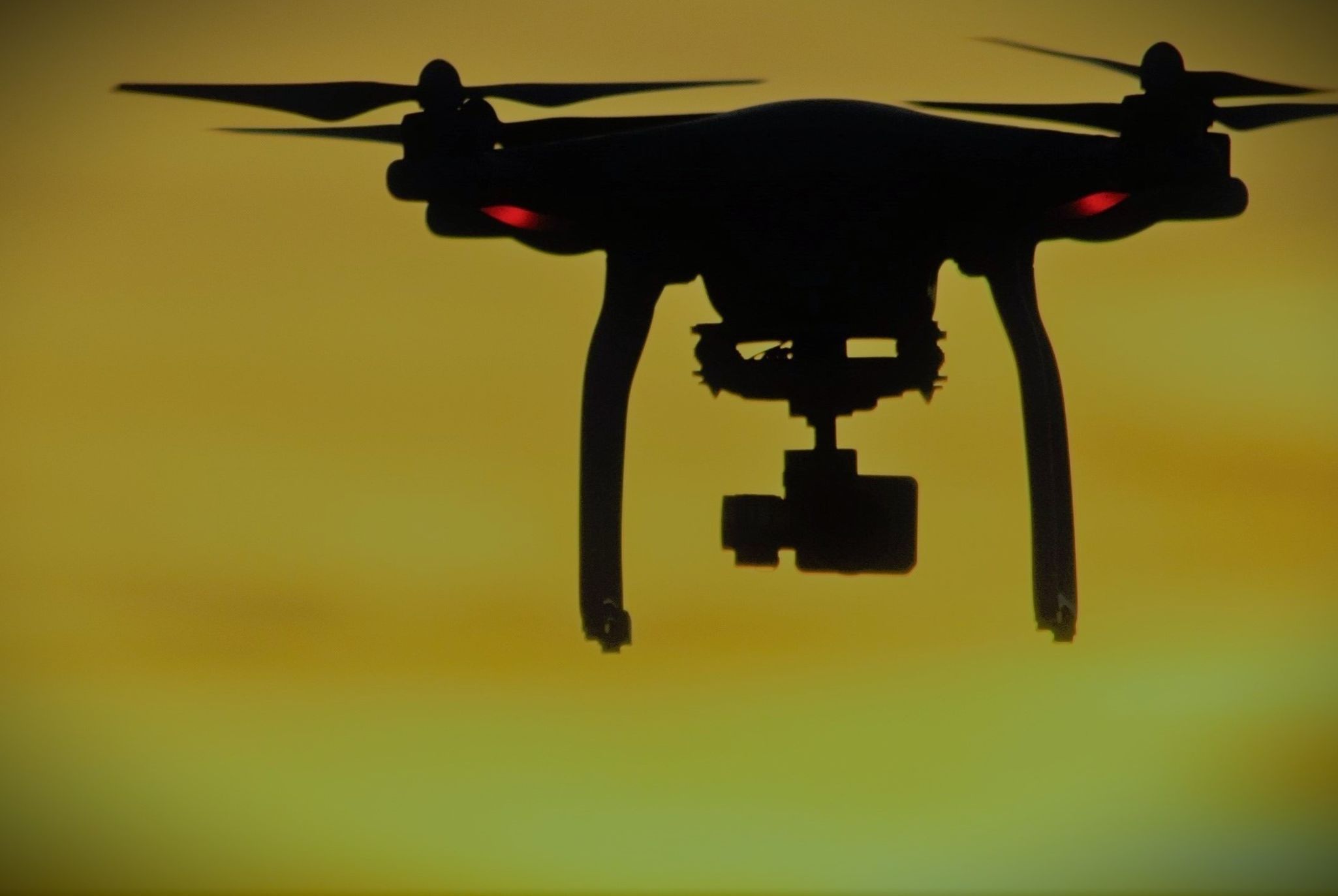
Late last week, the U.S. Commerce Department’s Bureau of Industry and Security (BIS) issued its long-anticipated rule to streamline export controls applicable to commercial and dual-use unmanned aerial vehicles (UAVs): Streamlining Export Controls for Drone Exports, 91 Fed. Reg. 52,501 (Aug. 14, 2026) (the Rule). While the Rule loosens controls on many commercial UAVs with lower endurance, the Rule also enhances controls in a few key areas.
Relaxed Controls on Many Commercial Drones
The most significant modification under the new rule is the removal of national security (NS) controls on UAVs that can be operated outside of the operator’s natural line of sight (BVLOS) and have an endurance of less than three hours.1 Previously, any UAVs that had “[a] maximum ‘endurance’ greater than or equal to 30 minutes but less than 1 hour” and were “[d]esigned to take-off and have stable controlled flight in wind gusts equal to or exceeding 46.3 km/h (25 knots)”; or had “[a] maximum ‘endurance’ of 1 hour or greater” were subject to NS controls.
Although these lower-endurance BVLOS UAVs will continue to be classified under the same Export Control Classification Number (ECCN) as the higher-endurance and more sophisticated UAVs (ECCN 9A012), they will not be subject to NS controls. Instead, the lower-endurance UAVs will be subject only to anti-terrorism (AT) controls, which allow exports to non-prohibited parties and end-uses in all countries except Belarus, Cuba, Iran, North Korea, Syria, Russia, and sanctioned regions of Ukraine.
This change increases controls on BVLOS UAVs that previously did not meet the technical criteria applicable under ECCN 9A012 and were previously classified in ECCN 9A991 or designated as EAR99. These lower-endurance UAVs are now specifically listed on the Commerce Control List (CCL) in ECCN 9A012 and identified in the military end-user/end-use controls in EAR Part 744. Thus, any sales/transfers of BVLOS UAVs involving Burma, Cambodia, China, Iraq, Nicaragua, or Venezuela (directly or indirectly) would require enhanced due diligence to confirm there will be no military end-user or end-use of the items. Those UAVs also cannot be sold or transferred to any party on the BIS Military End-User List. Similarly, this Rule change may also impact the treatment of BVLOS UAVs under the Foreign Direct Product Rules in EAR Part 734.9 (FDP Rules) and the De Minimis Rule in EAR Part 734.4 (the De Minimis Rule).
Higher-endurance UAVs and UAVs incorporating the listed cameras, lasers, radar systems, accelerometers, or gyros are now classified in ECCN 9A012.a.2-a.5 and continue to be subject to NS controls that require a license for export to all countries except Australia, Canada, and the United Kingdom, as well as missile technology controls if the range exceeds 300 kilometers. Hobby drones and other drones that cannot be controlled outside of the operator’s natural line of sight will continue to be subject to minimal export controls and classified in either ECCN 9A991 or EAR99. The Rule also does not impact controls on any UAVs that are described on the U.S. Munitions List and subject to the International Traffic in Arms Regulations (ITAR).
Enhanced Controls on UAVs for Military Application
The Rule clarifies BIS’s position on the correct classification of UAVs designed or modified for military application, confirming that ECCN 9A610 is intended to capture a broader range of UAVs. BIS explained that it would likely consider “certain UAVs that are capable of performing military reconnaissance, surveillance, or combat support” to be specially designed for military application and therefore captured in ECCN 9A610. In addition, BIS noted that “it is conceivable that other capabilities would also bring an item into the scope of 9A610.”
BIS further noted that other UAVs “designed or modified to meet the needs of a military customer by adding at least one feature or capability that would not also be included for civil or commercial purposes, regardless of significance, . . . should be reviewed for control under 9A610.a using the definition of ‘specially designed’ in [EAR] § 772.1.”
The Rule also expands the availability of License Exception STA to allow exports, re-exports, and transfers of these military UAVs under certain conditions. First, the exception is not available for any UAV that is capable of delivering a payload of at least 500 kg to a range of at least 300 km. Second, before the exception can be used, BIS must first determine that the item is eligible for use of License Exception STA pursuant to EAR § 740.20(g).
UAV-Related Software and Technology Controls
BIS modified controls on UAV-related software and technology to align with its changes to the hardware controls. More specifically, the Rule removes the NS control from the software and technology ECCNs tied to low-endurance UAVs (ECCNs 9D001, 9D002, 9D004.e, and 9E001, in each case relating to items in ECCN 9A012.a.1).
As with the hardware controls, some UAV software and technology that was previously controlled in ECCN 9D991, ECCN 9E991, or designated EAR99 could now be controlled in ECCNs 9D001, 9D002, 9D004.e, or 9E001. This software and technology will continue to be controlled only for anti-terrorism reasons but may be subject to enhanced military end-user/end-use controls and controls under the De Minimis Rule.
Software and technology tied to the longer-endurance or advanced sensor/inertial measurement unit (IMU)-equipped drones continue to be controlled for national security reasons.
Implications for the Drone Industry
Overall, we expect the Rule to have significant benefits for many in the drone industry. U.S. drone companies will no longer need a license to export many lower-endurance UAVs to customers in most parts of the world, and those customers will not need re-export licenses for most countries. In addition, drone companies that produce UAVs with military application may be able to use License Exception STA if BIS has confirmed that their products are STA-eligible.
However, the Rule includes a broad-reaching control, as well as new military end-user/end-use controls on some lower-endurance UAVs, and some software and technology that were previously designated as EAR99 may now be captured in various ECCNs. Many of those ECCNs are controlled only for anti-terrorism reasons, but the classification change may have implications under the FDP Rule and De Minimis Rule as well as the military end-user/end-use rule. The largest impact will likely be on companies that sell to or procure from China or other countries of concern.
As a next step, we recommend that companies in the drone industry:
- Reevaluate the export classifications applicable to their products and technologies. As BIS suggests in the Rule, exporters can submit a commodity classification request if there is any uncertainty. Companies may need to update classification information previously provided online or to customers.
- Review their screening procedures specifically related to end-use/end-user screening, as the Rule includes new end-user and end-use controls. End-use/end-user certificates may now be advisable in many situations to ensure compliance with these new controls.
- Ensure that any previous analysis regarding whether items are subject to the EAR is revised under the new Rule.
Please reach out to Josephine Aiello LeBeau, Jahna Hartwig, and Anne Seymour or another member of Wilson Sonsini’s Export Control and Sanctions practice with questions regarding any of the matters discussed above.
[1] UAVs excluded from this change are those specially designed or modified for military application and those that incorporate certain advanced cameras, lasers, radar systems, accelerometers, or gyros.