
WSGR logoWSGR logo
WSGR logo
  • Experience
  • People
  • Insights
  • About Us
  • Careers

  • Practice Areas
  • Industries

  • Corporate
  • Intellectual Property
  • Litigation
  • Patents and Innovations
  • Regulatory
  • Technology Transactions

  • Capital Markets
  • Corporate Governance
  • Corporate Life Sciences
  • Derivatives
  • Emerging Companies and Venture Capital
  • Employee Benefits and Compensation
  • Energy and Climate Solutions
  • Executive Advisory Program
  • Finance and Structured Finance
  • Fund Formation
  • Greater China
  • Mergers & Acquisitions
  • Private Equity
  • Public Company Representation
  • Real Estate
  • Restructuring
  • Shareholder Engagement and Activism
  • Tax
  • U.S. Expansion
  • Wealthtech

  • Special Purpose Acquisition Companies (SPACs)

  • Environmental, Social, and Governance

  • AI and Data Center Infrastructure
  • Energy Regulation and Competition
  • Project Development and M&A
  • Project Finance and Tax Credit Transactions
  • Sustainability and Decarbonization
  • Transportation Electrification

  • U.S. Expansion Library and Resources

  • Post-Grant Review
  • Trademark and Advertising

  • Antitrust Litigation
  • Arbitration
  • Board and Internal Investigations
  • Class Action Litigation
  • Commercial Litigation
  • Consumer Litigation
  • Corporate Governance Litigation
  • Employment Litigation
  • Executive Branch Updates
  • Government Investigations
  • Internet Strategy and Litigation
  • Patent Litigation
  • Securities Litigation
  • State Attorneys General
  • Supreme Court and Appellate Practice
  • Trade Secret Litigation
  • Trademark and Copyright Litigation
  • Trial
  • White Collar Crime

  • Advertising, Promotions, and Marketing
  • Antitrust and Competition
  • Committee on Foreign Investment in the U.S. (CFIUS)
  • Communications
  • Data, Privacy, and Cybersecurity
  • Export Control and Sanctions
  • FCPA and Anti-Corruption
  • FDA Regulatory, Healthcare, and Consumer Products
  • Federal Trade Commission
  • Fintech and Financial Services
  • Government Contracts
  • National Security and Trade
  • Payments
  • State Attorneys General
  • Strategic Risk and Crisis Management
  • Tariffs, Customs, and Import Compliance

  • Antitrust and Intellectual Property
  • Antitrust Civil Enforcement
  • Antitrust Compliance and Business Strategy
  • Antitrust Criminal Enforcement
  • Antitrust Litigation
  • Antitrust Merger Clearance
  • European Competition Law
  • Third-Party Merger and Non-Merger Antitrust Representation

  • Anti-Money Laundering
  • Foreign Ownership, Control, or Influence (FOCI)
  • Team Telecom

  • AI in Healthcare
  • Animal Health
  • Artificial Intelligence and Machine Learning
  • Aviation
  • Biotech
  • Blockchain and Cryptocurrency
  • Clean Energy
  • Climate and Clean Technologies
  • Communications and Networking
  • Consumer Products and Services
  • Data Storage and Cloud
  • Defense Tech
  • Diagnostics, Life Science Tools, and Deep Tech
  • Digital Health
  • Digital Media and Entertainment
  • Electronic Gaming
  • Fintech and Financial Services
  • FoodTech and AgTech
  • Global Generics
  • Internet
  • Life Sciences
  • Medical Devices
  • Mobile Devices
  • Mobility
  • NewSpace
  • Quantum Computing
  • Semiconductors
  • Software

  • Offices
  • Country Desks
  • Events
  • Community
  • Our Diversity
  • Sustainability
  • Our Values
  • Board of Directors
  • Management Team

  • Austin
  • Boston
  • Boulder
  • Brussels
  • Century City
  • Hong Kong
  • London
  • Los Angeles
  • New York
  • Palo Alto
  • Salt Lake City
  • San Diego
  • San Francisco
  • Seattle
  • Shanghai
  • Washington, D.C.
  • Wilmington, DE

  • Law Students
  • Judicial Clerks
  • Experienced Attorneys
  • Patent Agents
  • Business Professionals
  • Alternative Legal Careers
  • Contact Recruiting
California Courts Rule Federal Forum Selection Provisions in Chartering Documents Enforceable
Alerts
December 9, 2020

In March, the Delaware Supreme Court held in Salzberg v. Sciabacucchi, 227 A.3d 102 (Del. 2020) that "Federal Forum Selection Provisions," corporate bylaw or charter provisions that require claims under the Securities Act of 1933 (the "Securities Act") to be brought in federal court, are facially valid under Delaware's General Corporation Law. Wilson Sonsini represented Stitch Fix, Inc. and Roku, Inc. and their respective directors in the Sciabacucchi case, and previously issued an alert describing the Sciabacucchi opinion. The Delaware Supreme Court, however, expressly left open the question of whether Federal Forum Provisions were enforceable, leaving that decision to the various state courts in which Securities Act claims were filed. Three recent decisions in California have considered the enforceability of Federal Forum Provisions adopted by Restoration Robotics, Inc., Uber, Inc., and Dropbox, Inc., as a matter of first impression, and each found the provisions enforceable under California law.

In an opinion issued on December 4, 2020, Judge Nancy Fineman of the San Mateo County Superior Court granted Dropbox's Motion to Dismiss, holding that the Federal Forum Provision in Dropbox, Inc.'s bylaws was enforceable and required litigation of plaintiffs' Securities Act claims in federal court. In re Dropbox, Inc. Securities Litigation, Case No. 19-CIV-05089 (San Mateo Cty., CA). In the order, the Court rejected plaintiffs' argument that the Supreme Court's decision in Cyan, Inc. v. Beaver Cty. Emps. Ret. Fund, 138 S. Ct. 1061 (2018), which held that Securities Act cases brought in state court could not be removed to federal court, prohibited enforcement of Federal Forum Provisions under both federal and California law. Instead, the Court was guided by Rodriguez de Quijas v. Shearson/American Express, 490 U.S. 477 (1989), in which the Supreme Court held that the Securities Act's provision conferring concurrent state court jurisdiction without the possibility of removal is not critical to a complainants' substantive rights and may be waived. The Court also held that Plaintiffs failed to show that Dropbox's Federal Forum Provision was unfair, unreasonable, or unconscionable: Dropbox provided a legitimate business need for adopting the provision (to avoid defending multiple cases simultaneously in both state and federal court); the provision allows plaintiffs to file in any federal court; the federal forum permits shareholders to pursue the same claims and remedies as the state court; and federal courts are well suited to handle claims under the Securities Act. Wilson Sonsini Goodrich & Rosati represents Dropbox and its officers and directors in this lawsuit.

In addition to the two other recent decisions enforcing Federal Forum Provisions, Judge Fineman's decision in Dropbox represents an important milestone in the enforcement of Federal Forum Provisions. Nevertheless, the question of enforceability of Federal Forum Provisions is not yet settled in California; the three recent state court decisions are not binding precedent in California, and at least one of the three recent decisions has been appealed by plaintiffs.

Wilson Sonsini previously issued an alert discussing key questions and considerations in potentially adopting a Federal Forum Provision. For further information regarding the adoption and enforceability of Federal Forum Provisions, please contact any member of Wilson Sonsini's public company, capital markets, corporate governance litigation, and securities litigation practices.
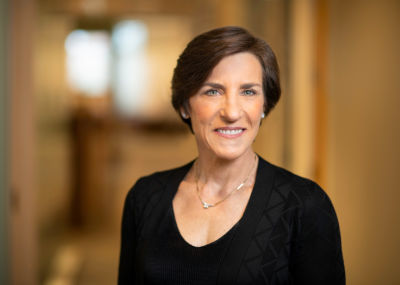
Contributors

  • Nicki Locker
  • Evan L. Seite
  • Eric T. Kohan
  • people
  • insights
  • about us
  • careers
  • Binder
  • Alumni
  • Mailing List Signup
  • Client FTP Portal
  • Privacy Policy
  • Terms of Use
  • Accessibility
WSGR logo
Twitter
LinkedIn
Facebook
Instagram
Youtube
Copyright © 2026 Wilson Sonsini Goodrich & Rosati. All Rights Reserved.