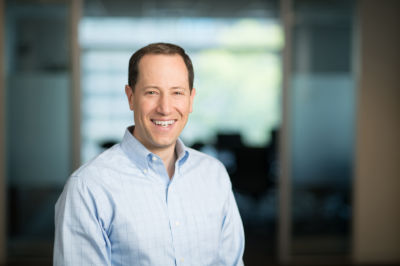
Wilson Sonsini partner Stephen Heifetz—who held national security positions at the CIA, Department of Justice, and Department of Homeland Security, including as a Homeland Security representative to the Committee on Foreign Investment in the United States (CFIUS)—and Andrew Grotto, co-director of Stanford University’s Program on Geopolitics, Technology, and Governance and a former senior director on the National Security Council in two presidential administrations, recently co-authored a report offering actionable recommendations for strengthening U.S. investment policy framework and navigating today’s evolving CFIUS landscape.
Titled “CFIUS and ‘The America First’ Investment Policy: Nine Recommendations for Executive Action,” the report highlights that while President Trump has secured substantial commitments for foreign investment in the United States, the costs for U.S. businesses to access that capital have risen sharply in recent years. The authors note that although CFIUS’ national security mandate remains critical, several aspects of the review process impose significant—often unseen—costs on investors in terms of time, money, and other resources, without delivering meaningful national security benefits.
Drawing on their combined government experience and insights synthesized from dozens of CFIUS-focused lawyers, Stephen and Andrew outline nine detailed recommendations to reduce unnecessary barriers to desirable foreign investment while preserving strong national security protections.
Read the report, originally published by the Stanford Center for International Security and Cooperation, here.