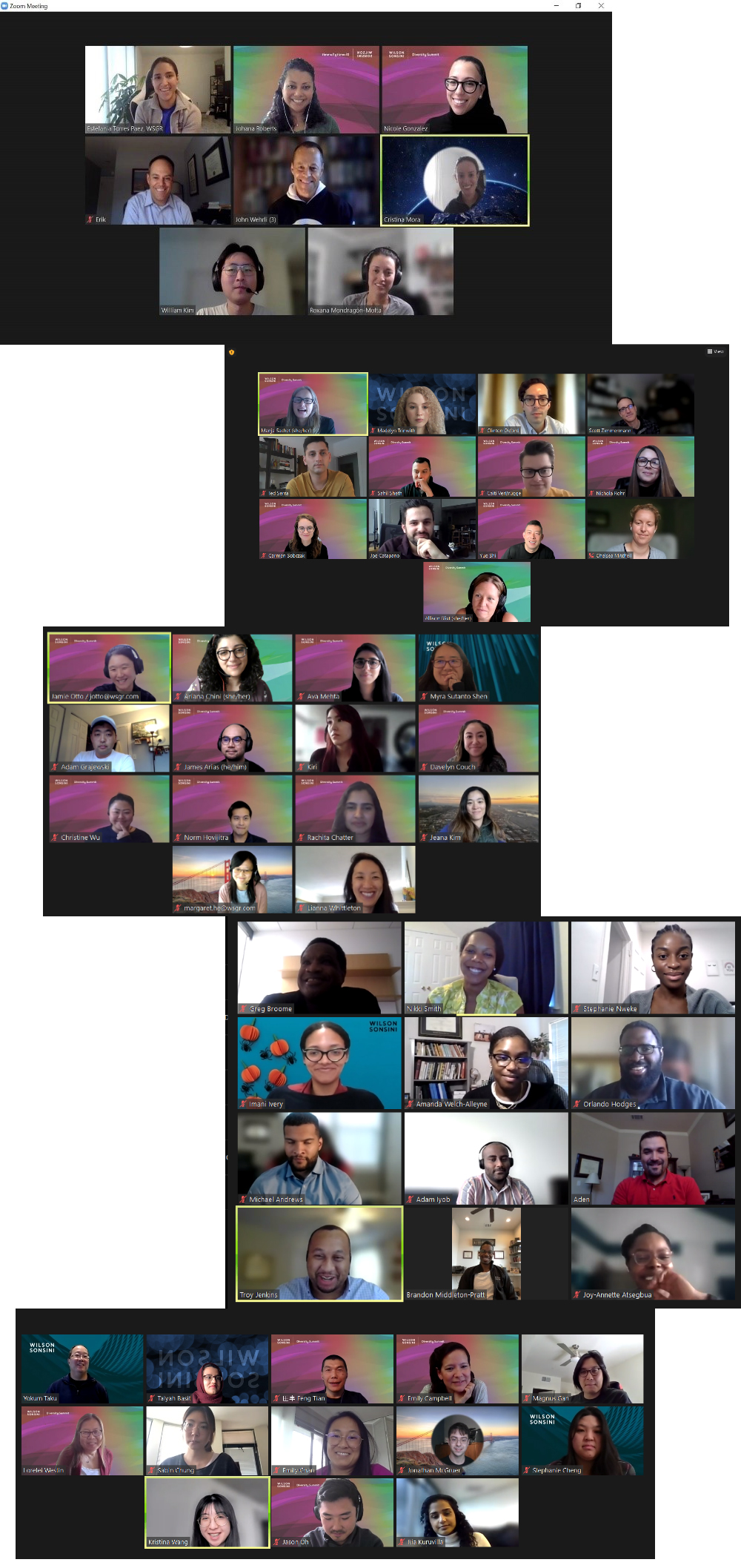
On October 13-14, 2021, Wilson Sonsini held its second Diversity Summit featuring two half-days of interactive panel discussions, presentations, and networking opportunities. With the theme “Amplifying All Voices,” the interactive virtual event brought together over 150 attorneys from across the firm.
Following a brief introduction by corporate partner and Diversity and Inclusion Committee co-chair Jennifer Fang, managing partner Doug Clark kicked off the summit with opening remarks. Reflecting on the past few years, he commented how proud he is of the firm’s ongoing focus on “the quality of our environment and the strength of our culture,” rather than on diversity rankings and statistics alone, and cited the summit as a prime example of our commitment to both advancing diversity at the firm and contributing to diversity in the legal industry. After referencing a number of recent accomplishments—including our third consecutive Mansfield Plus Certification, Juneteenth Day of Service and Celebration, 1L Student Diversity Summit, Diversity Hours policy, and inclusion training, among others—Doug concluded by noting, “We are committed to doing more work. It’s our obligation to our community and to the industry to not just follow legal trends, but to set them.”
The summit continued with “Different Avenues to Partnership,” a panel featuring New York corporate partner Megan Baier, New York antitrust partner Chul Pak, Palo Alto employment partner Rico Rosales, and Seattle technology transactions partner Manja Sachet, and moderated by Allison Blixt, senior director of professional development, diversity, and inclusion. Each of the panelists spoke about what made them want to become a lawyer, when they knew they wanted to become a partner, and the role their diverse identity has played in their career. In addition, they described career highlights, shared what keeps them hopeful about diversity in the legal industry, and offered advice to attorneys who may be contemplating becoming a partner.
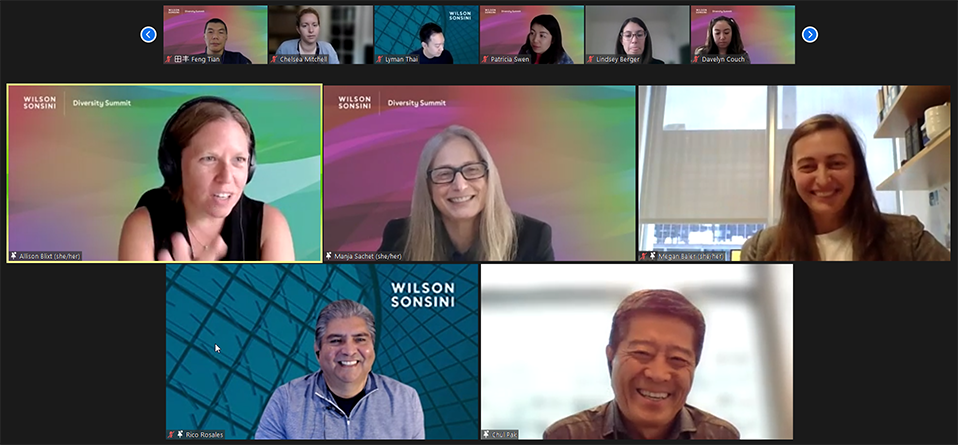
Key quotes from “Different Avenues to Partnership” panelists:
On the role their diverse identity has played in their career
Megan: “Early on, when I first started dating my now-wife, I wasn’t very overt about my relationship at work. It wasn’t that my firm wasn’t supportive, but it was all about going in, doing the work, and going home. Over time, I became more authentic at work. As I’ve moved into a more senior role, I’ve tried to be more open so other people feel they have the space to do the same. We are bringing our brain and our advice to what we do, and the collaboration and interaction we have with our colleagues is one of the best parts of that.”
Chul: “There were instances as a lawyer where my ethnicity probably hurt me. … To the extent there was any negativity associated with it, I’d do things to overcome it. I’m mindful there are stereotypes Asians are associated with, such as being quiet. I thought to myself, ‘I need to make sure I don’t get pigeonholed as the second chair by being too quiet.’ I tried to make my presence known a little better.”
Manja: “I had a diverse mentor [retired Wilson Sonsini partner Parag Gheewala] who was amazing, so it wasn’t that I didn’t have diverse mentorship, but I was longing for female mentorship. The opportunities for that just didn’t exist in my practice group in my office in the way I was hoping for. Once I was able to take on more of a leadership role, including as a senior associate, I made a proactive decision to be more available in a way that feels more authentic to me, so that I can provide support to others in a way I didn’t feel I had. It was more about the female part of my identity than the queer part of my identity.”
Rico: “My dad was an immigrant, and I don’t think he ever felt he belonged in a predominantly Caucasian society. I adopted a lot of those sentiments. There is probably not a day that goes by in Big Law that I haven’t felt different or that I wasn’t aware of my Latino identity. In some ways, it’s been a strong motivator, especially early in my career when there weren’t as many people of color. I wanted to prove to others that I could play at this level. I remember a client in Orange County once told me, ‘You know, you don’t really look like an Orange County lawyer.’ It’s pushed me to want to be better.”
On what keeps them optimistic about diversity in the legal industry
Megan: “It’s a client service industry, so a lot is driven by what our clients want. When they ask for information about diversity statistics and what diversity means to us in pitches and proposals, it’s not just a check-the-box exercise. If they’re saying they want more diverse teams and for us to bring more diverse viewpoints to the table, that’s a way to really pull everyone in the right direction.”
Rico: “I’m encouraged because when I first started in Big Law, there weren’t many people of color. Today we see diversity in our clients, the number of female GCs and heads of employment. The number of people of color in those positions has changed dramatically over the past few decades. I would like to see more change in terms of Blacks and Latinos in Big Law, but I’m not pessimistic. We just have to keep doing what we can in little and big ways to help achieve that.”
Chul: “I see the change in terms of the people joining the firm; it’s a much more diverse group. I’ve always felt that Wilson is very open and inclusive. It’s become more formalized through initiatives like this, and management deciding to take it on proactively with their commitment. I’m also seeing it on the client side, where hiring and promotions are occurring and there’s a drive to hold law firms accountable. On all fronts, there’s a lot more openness and desire to make sure legal teams represent and look like the rest of society.”
Manja: “As a small example, earlier this year, NASDAQ passed a board diversity rule, which is a huge structural commitment. It’s very encouraging. And all of the small stuff that we as individuals do every day to meet those commitments to ourselves and our communities, that gives me hope.”
On tips for attorneys who are considering partnership
Chul: “Focus on developing your own set of skills and knowledge, but also work on interpersonal skills, because the role of a partner is more than just about work—it’s about client relationships; it’s about client development; it’s a lot of interpersonal-skill type of things. For some people, that comes naturally, but for people like me, it’s something you have to cultivate and work on. Be available, be able to connect with people, and think about those soft skills.”
Manja: “Ask a lot of questions. Find out from multiple people what it means to be a partner or have another role in the firm, and figure out what’s most appealing to you. I didn’t recognize that the job changes quite a bit from senior associate to partner, and you should inform yourself about what those changes are—client management, client development, administrative work, and mentoring/training. Know that there is a place for talent within the firm, whatever the answers to those questions are.”
______________________
In the next session, corporate business development director Omar Mattox presented “Elevating Your Business Development Skills.” He opened by explaining the difference between marketing ("the act of creating awareness and converting that into business”) and business development (“the creation of long-term value for an organization from customers and relationships”). He also outlined key law firm marketing tactics such as creating awareness (also known as “branding”); generating business through targeting, referral networks, lead development, and proposals; and providing strong client service. In addition, Omar reviewed three important ways attorneys can successfully build their personal brand—through networking, relationship management, and enhancing their online presence. At the end of the session, attendees were provided with a list of organizations and resources for attorneys from underrepresented communities.
The first day of the summit concluded with a series of Affinity Group drop-in sessions, where participants had the opportunity to join one of several breakout rooms to connect and socialize with members of a specific Affinity Group.
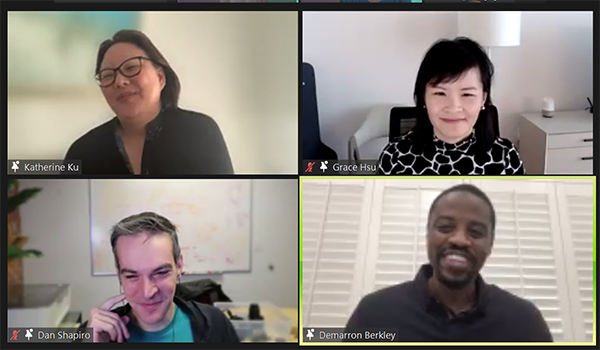
Day two of the event opened with a welcome address by Jullia Carretta, senior manager of professional development and diversity, followed by a panel session titled “Making an Impact with Clients.” Moderated by Los Angeles corporate partner Kathy H. Ku, the panel featured Wilson Sonsini clients Demarron Berkley, senior litigation counsel at Google; firm alumna Grace Hsu, head of legal at Lunar Energy; and Dan Shapiro, CEO and co-founder of Glowforge. Among other topics, the panelists spoke about their career paths, their professional experience with respect to diversity and inclusion at different organizations, how their companies think about D&I as a consideration when hiring outside advisors, and what they want from lawyers to help them do their jobs and achieve their missions.
Key quotes from “Making an Impact with Clients” panelists:
Demarron: “Nowadays, everyone says D&I is important, but you see a difference in the culture of the organization and the amount of resources the organization dedicates to those issues. You see the differences play out over time depending on how entrenched D&I is in an organization’s DNA. Before becoming a lawyer, I was an engineer, and early on I was in a program where you rotated across different areas. It wasn’t a diversity program, but the company used it as a way to recruit diverse talent, underrepresented minorities. When a company has that in mind, they can use whatever tools they have to further that cause. [As opposed to the firm where] the extent of the D&I program was a statement on their website saying they do not discriminate on the basis of these categories.”
Grace: “At Clearway Energy, we created a pan-Asian diversity group, and helping to lead it was a struggle for me because it’s not in my personality to stick my head out on an issue like that, especially as a lawyer where you want to be seen as objective. But I felt I owed it to people of color and younger women who might identify with this group to speak up, especially since a characterization of the Asian community is that we’re quieter. So, I thought I needed to do my part to contribute to that voice and discussion within the company.”
On D&I as a consideration when selecting outside advisors
Demarron: “We want the best lawyers representing us; that’s really important in litigation. But we also stress that we want diversity in our team. And the two aren’t mutually exclusive. You can have great, diverse teams that are full of smart, creative people, so that’s what we ask for.”
Final tips on what clients want
Demarron: “Don’t be afraid to express your opinions. … The reality is that we’re paying smart people to give us advice, and sometimes that doesn’t line up with what we originally thought. I need folks to be able to push back and say, ‘But wait, have you thought about this?’ On the flip side, if we tell you to go this way, we need you to not fight every step of the way.
On communicating, don’t bury the lead. Start out with your recommendation and then fill up the rest of the email with the analysis and explanation as to why.”
Grace: “I feel like I’m pretty responsive to communications that come my way, so I really want responsive communications from my counsel. Even just a confirmation that they got my email and are working on it. And be honest about communicating your expectations.”
Dan: “There’s a principle I offer to founders and entrepreneurs—I say, ‘Look, a bad lawyer sees their job as saying yes or no. A good lawyer sees their job as mapping out the risk of different approaches. And a great lawyer sits down with you and asks what problem you’re trying to solve and helps you figure out how to solve it.’ The real goal is for the lawyer to understand what you’re trying to accomplish and help you find a way to deliver that.”
__________________________
After a short break, attendees participated in connection-building breakout sessions where they had the chance to get to know some of their colleagues and discuss their takeaways from the summit.
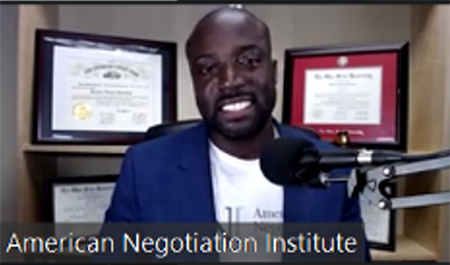
The event continued with an interactive presentation featuring Kwame Christian, an attorney, speaker, director of the American Negotiation Institute (ANI), and bestselling author of the book, Finding Confidence in Conflict: How to Negotiate Anything and Live Your Best Life. The session reinforced ANI’s motto: “The best things in life are on the other side of difficult conversations.” Attendees discussed the definition of negotiation, leading to the conclusion that negotiation presents an opportunity to change someone’s mindset, and should be viewed as a life philosophy, rather than a skill. Kwame then outlined his “compassionate curiosity framework” for use in difficult conversations. The framework—which consists of three steps: 1) acknowledge and validate emotion; 2) get curious with compassion; and 3) joint problem solving—offers an effective means to navigate tough discussions with everyone from opposing counsel to family members. As Kwame noted, “There’s no point in sending a message if they’re not psychologically ready to receive it.
Following Kwame’s presentation, Allison Blixt delivered closing remarks that highlighted key points from the summit and looked ahead to upcoming diversity and inclusion initiatives. “We are committed to doing the work,” she emphasized. “Working at a firm that takes this seriously is so important.”
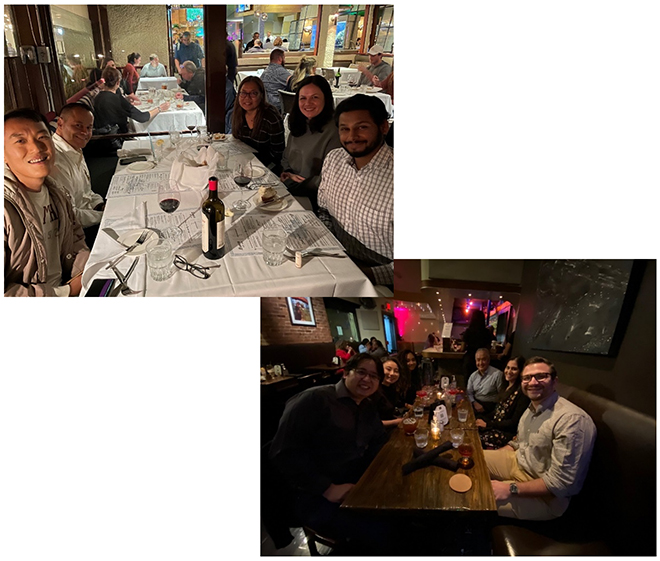
In conjunction with the Diversity Summit, the firm sponsored “Dine About Town” gatherings near several of the firm’s offices, giving diverse attorneys the opportunity to connect in person with colleagues.