
WSGR logoWSGR logo
WSGR logo
  • Experience
  • People
  • Insights
  • About Us
  • Careers

  • Practice Areas
  • Industries

  • Corporate
  • Intellectual Property
  • Litigation
  • Patents and Innovations
  • Regulatory
  • Technology Transactions

  • Capital Markets
  • Corporate Governance
  • Corporate Life Sciences
  • Derivatives
  • Emerging Companies and Venture Capital
  • Employee Benefits and Compensation
  • Energy and Climate Solutions
  • Executive Advisory Program
  • Finance and Structured Finance
  • Fund Formation
  • Greater China
  • Mergers & Acquisitions
  • Private Equity
  • Public Company Representation
  • Real Estate
  • Restructuring
  • Shareholder Engagement and Activism
  • Tax
  • U.S. Expansion
  • Wealthtech

  • Special Purpose Acquisition Companies (SPACs)

  • Environmental, Social, and Governance

  • AI and Data Center Infrastructure
  • Energy Regulation and Competition
  • Project Development and M&A
  • Project Finance and Tax Credit Transactions
  • Sustainability and Decarbonization
  • Transportation Electrification

  • U.S. Expansion Library and Resources

  • Post-Grant Review
  • Trademark and Advertising

  • Antitrust Litigation
  • Arbitration
  • Board and Internal Investigations
  • Class Action Litigation
  • Commercial Litigation
  • Consumer Litigation
  • Corporate Governance Litigation
  • Employment Litigation
  • Executive Branch Updates
  • Government Investigations
  • Internet Strategy and Litigation
  • Patent Litigation
  • Securities Litigation
  • State Attorneys General
  • Supreme Court and Appellate Practice
  • Trade Secret Litigation
  • Trademark and Copyright Litigation
  • Trial
  • White Collar Crime

  • Advertising, Promotions, and Marketing
  • Antitrust and Competition
  • Committee on Foreign Investment in the U.S. (CFIUS)
  • Communications
  • Data, Privacy, and Cybersecurity
  • Export Control and Sanctions
  • FCPA and Anti-Corruption
  • FDA Regulatory, Healthcare, and Consumer Products
  • Federal Trade Commission
  • Fintech and Financial Services
  • Government Contracts
  • National Security and Trade
  • Payments
  • State Attorneys General
  • Strategic Risk and Crisis Management
  • Tariffs, Customs, and Import Compliance

  • Antitrust and Intellectual Property
  • Antitrust Civil Enforcement
  • Antitrust Compliance and Business Strategy
  • Antitrust Criminal Enforcement
  • Antitrust Litigation
  • Antitrust Merger Clearance
  • European Competition Law
  • Third-Party Merger and Non-Merger Antitrust Representation

  • Anti-Money Laundering
  • Foreign Ownership, Control, or Influence (FOCI)
  • Team Telecom

  • AI in Healthcare
  • Animal Health
  • Artificial Intelligence and Machine Learning
  • Aviation
  • Biotech
  • Blockchain and Cryptocurrency
  • Clean Energy
  • Climate and Clean Technologies
  • Communications and Networking
  • Consumer Products and Services
  • Data Storage and Cloud
  • Defense Tech
  • Diagnostics, Life Science Tools, and Deep Tech
  • Digital Health
  • Digital Media and Entertainment
  • Electronic Gaming
  • Fintech and Financial Services
  • FoodTech and AgTech
  • Global Generics
  • Internet
  • Life Sciences
  • Medical Devices
  • Mobile Devices
  • Mobility
  • NewSpace
  • Quantum Computing
  • Semiconductors
  • Software

  • Offices
  • Country Desks
  • Events
  • Community
  • Our Diversity
  • Sustainability
  • Our Values
  • Board of Directors
  • Management Team

  • Austin
  • Boston
  • Boulder
  • Brussels
  • Century City
  • Hong Kong
  • London
  • Los Angeles
  • New York
  • Palo Alto
  • Salt Lake City
  • San Diego
  • San Francisco
  • Seattle
  • Shanghai
  • Washington, D.C.
  • Wilmington, DE

  • Law Students
  • Judicial Clerks
  • Experienced Attorneys
  • Patent Agents
  • Business Professionals
  • Alternative Legal Careers
  • Contact Recruiting
California Court of Appeal Issues First Ever Decision on State's Automatic Renewal Law; Curbs Misuse of Statute
Alerts
September 14, 2020

On September 11, 2020, the California Court of Appeals handed down a published decision in Mayron v. Google, one of the earliest cases brought under California's notorious Automatic Renewal Law (ARL), California Business and Professions Code Section 17600 et seq. The ARL imposes detailed disclosure requirements for any recurring delivery of goods or services in California. In particular, it requires a business to clearly and conspicuously disclose offer terms and cancellation policy in any automatic renewal offer. It also requires companies to obtain affirmative consent and to provide an "acknowledgment" with the offer terms and cancellation information. And Section 17603 of the ARL declares that where a business' disclosures fail to satisfy the ARL, barring proof of good faith, any goods the business sends to a subscriber are to be treated as an "unconditional gift."

The ARL has been wielded aggressively by plaintiffs' firms in countless lawsuits seizing on any shortcoming in disclosures and claiming it transforms all goods or services received by California subscribers into gifts. These cases demand full refunds on behalf of putative classes of California purchasers dating back years. Settlements of such cases have been substantial. For example, Apple, Inc. paid $16.5 million in 2018 to settle a class action alleging that it failed to disclose to California consumers that subscriptions would "continue until cancelled" and that cancellations would not result in refunds of prior charges.

Mayron, the first published California appellate decision on the ARL, should stem the litigation tide. In it, the Sixth District Court of Appeal affirmed dismissal of a putative class action complaint against Google that asserted claims under the ARL and California's Unfair Competition Law (UCL), Cal. Bus. & Prof. Code § 17200 et seq. Two aspects of the decision are particularly noteworthy.

First, the Court of Appeals affirmed that there is no private right of action under the ARL itself. Rather, the ARL can only be enforced using other, existing remedial laws, such as the UCL. That is significant because, following enactment of Proposition 64, the UCL has a stringent standing requirement, allowing claims only by those who have lost money or property as a result of some alleged wrongdoing.

Second, the Court conclusively rejected the theory that private plaintiffs can establish UCL standing simply by alleging that they were charged for subscriptions that were rendered "unconditional gifts" by operation of Section 17603. It found that "[t]he unconditional gift provision of the automatic renewal law creates a right to retain a product already received. That right is a consequence of violating the statute. But a consequence imposed on a defendant for violating a statute is not the same thing as a loss caused by the defendant's conduct." Instead, according to the Court, to pursue an ARL violation, a plaintiff needs to plead and prove some loss of money or property attributable the alleged ARL violation; that is, a plaintiff must show that but for some allegedly deficient disclosure, the plaintiff would not have purchased their subscription, or would have canceled it prior to paying for a renewal. In reaching this result, the Court expressly rejected a more lenient approach applied by a number of federal courts, including the Ninth Circuit, that minimized or ignored the causation required to establish UCL standing.

Mayron significantly raises the pleading bar for ARL plaintiffs. Some may surely continue to pursue claims where they have actually suffered harm caused by an ARL violation. But those unaffected by some minor quibble with disclosures, will no longer be able to sue to recover payments made for subscription goods or services that they purchased knowing they would be charged on a recurring basis. Further, class certification in ARL cases should become rare, because class-wide proof of reliance and appropriate restitution will be hard to come by.

Wilson Sonsini Goodrich & Rosati was counsel for Google LLC in both the trial and appellate courts. The Wilson Sonsini team representing Google in the case includes partners Brian Willen and David Kramer, Of Counsel Shelby Pasarell Tsai, and associate Amit Gressel. Any of these attorneys may be reached to discuss the decision or any related matters.
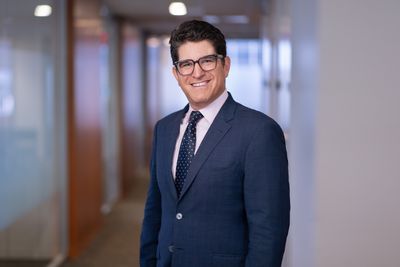

Contributors

  • Brian M. Willen
  • David H. Kramer
  • people
  • insights
  • about us
  • careers
  • Binder
  • Alumni
  • Mailing List Signup
  • Client FTP Portal
  • Privacy Policy
  • Terms of Use
  • Accessibility
WSGR logo
Twitter
LinkedIn
Facebook
Instagram
Youtube
Copyright © 2026 Wilson Sonsini Goodrich & Rosati. All Rights Reserved.