


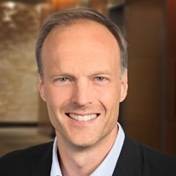
 Stephen Erickson was one of the first 10 attorneys in Wilson Sonsini’s Austin office once it opened in 1999. After 20 subsequent years holding in-house counsel roles for various companies, in 2021 he was appointed CEO of Peoples Pharmacy—the largest independent pharmacy chain in Austin. We recently spoke with Stephen about his career path, his recommendations for those considering an in-house or executive career, his time at Wilson Sonsini, and how his experience here still helps to shape his current role as CEO more than two decades later.
Did you choose your law/executive career, or did it choose you?
I chose the law, and my current position found me! After leaning toward accounting early at UVA, I took constitutional law with Henry Abraham, a renowned author on the Supreme Court and judicial process. Those classes were much more interesting to me than my accounting classes, although I currently use my accounting background infinitely more often than I do my college constitutional law classes.
My current position as CEO of Peoples Pharmacy was serendipitous to say the least. I was serving as chief administrative officer and GC for Logix Fiber Networks, where I oversaw all legal, real estate, and HR matters. After a year of working from home and having HR go from 15 percent of my workload to 80 percent due to Covid, I happened to reach out to my estate lawyer about updating our wills, and I told him I was ready for a new challenge. Earlier that week, he had been appointed as guardian to the founder of Peoples, who was incapacitated and in declining health. A new board of directors had been put in place with the help of the probate court, and their first order of business was to find a CEO who could either turn the company around, or take it through a bankruptcy process, which I’d worked through at a prior company.
At the time I stepped in, Peoples was a stable business with over 40 years of history in Austin and a devoted customer base, but without the founder in place, it needed direction and required some unpopular decisions to get back to profitability. The customer loyalty continues to be truly remarkable—with families celebrating how we helped them get through a time when their child couldn’t sleep, when there were fertility challenges, and more—and I’m incredibly proud of that.
Could you tell us a bit more about your career trajectory, including what you learned during your time at Wilson Sonsini?
When I moved back home to Austin in 1995 after law school, the only legal jobs available were in litigation or lobbying. Anyone who wanted to do corporate work was moving away, mainly to Dallas or Houston. With the advent of the dot-com boom, anyone who wanted to get back to Austin was back by 2000 or 2001. After a few years litigating at another firm, I began to branch out into real estate and corporate work, which convinced me I needed to do something other than litigation. When Paul Tobias opened Wilson Sonsini's Austin office in late 1999, I reached out to the firm and expressed interest in making a complete switch to corporate law. It was the best career move I made prior to becoming CEO at Peoples!
I’m sure I learned more in my first six months at Wilson than I have learned at any other point in my career—partly because we were working around the clock, but mainly because there were so many deals to work on—VC financings and IPOs. The educational support from all of the other lawyers across the firm was invaluable—sitting in on conference calls, attending board meetings, and reviewing lots and lots of marked-up documents. And just as important was the focus on the business and not just the legal foundation—while the legal underpinnings were essential, learning to listen to the needs of the business and help find workable solutions has had the most long-lasting impact on my future career stops.
When I joined Peoples, decisions were based on the question “What would [the founder] Bill do?” My time at Wilson, and learning the Business Judgment Rule, helped me to redirect toward “What is a good business decision?” Pharmacies don’t make money off of prescriptions. Our founder had various pet projects, that he considered loss leaders—but that wouldn’t be sustainable. So, I focused on how to honor his vision while moving toward running Peoples like a business.
How did you find the experience of moving in-house? Any advice for those looking to do the same?
Closing financings and IPOs was a thrill, but one area that was lacking with most of my client relationships was continuity in between the transactions. I remember working on a few large joint venture agreements, and once they were signed up, we—as outside counsel—were not aware of how the deals were working out. And once invested in a client’s well-being and success, I wanted to know more about how the company was doing. I moved in-house with a software client, and it was ironic that my litigation background was one of the key reasons they needed me, as they had five or six litigation matters pending. Fortunately, that was a small part of my workload, and I was able to get all of those resolved within a year. Sarbanes-Oxley took effect during this timeframe, and Schlotzsky’s Deli, which was traded on NASDAQ, needed a corporate attorney to help get them compliant with all of the changes that came with those new regulations, so I moved over there to handle all of their corporate governance and securities needs.
I have enjoyed every in-house position I’ve held, primarily because I’m interested in the mechanics of every business—how they work, the underlying culture, the opportunities and challenges that are specific to each industry. For anyone new to an in-house role, I strongly encourage you to learn every aspect of the business. If it's a restaurant, spend time in the kitchen, sit with the person placing the orders for inventory, invite yourself to marketing meetings. Immerse yourself in as much of the company as you can, and you will be a better advisor and will prove to be more helpful to leaders across the company.
What would you say have been your biggest challenges being in-house and now heading up a company as president and CEO?
Funny enough, my biggest challenge as a CEO stems from my litigation background—I want to know what the answer is before I ask the question, and as CEO I want to know how something will turn out before I commit to it. Which simply doesn’t work in business! We had to cut several departments early in my tenure at Peoples, and I could quantify most of the results from those changes. But when we added new offerings in our stores, or when we moved a location, or when we partnered with a third party, I knew what results we were hoping to see, but there was no level of preparation that would guarantee success with those initiatives. I could work through all aspects with my team and try to cover all contingencies, but success ultimately turns on customer reaction and enthusiasm. My time at Wilson trained me to apply the Business Judgment Rule, and I can’t help it!
As CEO, I may make the final decision to move forward with a new project, but I’m relying on various other employees, and hoping not all of them are as conservative as I am in making bold decisions related to growth opportunities!
How have you been able to achieve work-life balance and what do you do to unwind?
I’m not sure that ‘balance’ is quite the right word for what most of us lawyers and executives do—that indicates that work and personal lives are evenly weighted. Work would far outweigh everything else on a scale, but I’ve been able to move work around so it works for me and my family.
I’ve got three sons—one at UT, one at my alma mater (UVA), and one will be a senior in high school in the fall. Over the course of my career, I’ve had phases where I’ve worked early most mornings before the kids woke up, and/or worked late after they went to bed. I’ve had to watch some baseball games from my car while taking a call. When my boys were younger, breakfast before school was usually protected time, as well as the window from dinner to their bedtime. While our Boy Scout days are behind us, I try to get the boys out with me to camp and hike somewhere every summer.
My exercise routine is currently before work, but it’s been at lunch or before dinner in the past—or relegated to weekends when I was young enough for that to be all I needed to stay in shape! I try to exercise every morning, whether hitting the gym, swimming laps, walking around the neighborhood or fitting in a spin class. On weekends I aim for a 20- to 35-mile bike ride. Exercise has become a non-negotiable activity over the last 10-15 years.
What’s something interesting that people would be surprised to learn about you?
If I have time to read on most days, then I can’t complain that I’m working too much. Between hard-copy books and Audible, I try to have one fiction and one nonfiction book going at all times. I am part of a book club that is reading a biography of every president once a quarter, starting with George Washington, so it’s a 10-year project.